SOLAR SCREEN INSTALLATION
SOLAR SCREEN INSTALLATION IN Lafayette, LA
Exterior solar screen fabrics stop 80 to 90 percent of the sun's heat and glare before it ever touches the glass, which is why they outperform any blind or film mounted on the inside. LA Home Improvements LLC builds and installs solar screens for Lafayette homes, building frames to fit each individual opening and selecting fabric density elevation by elevation, so that west-facing rooms get real relief without turning the north side of your house dark and gloomy.
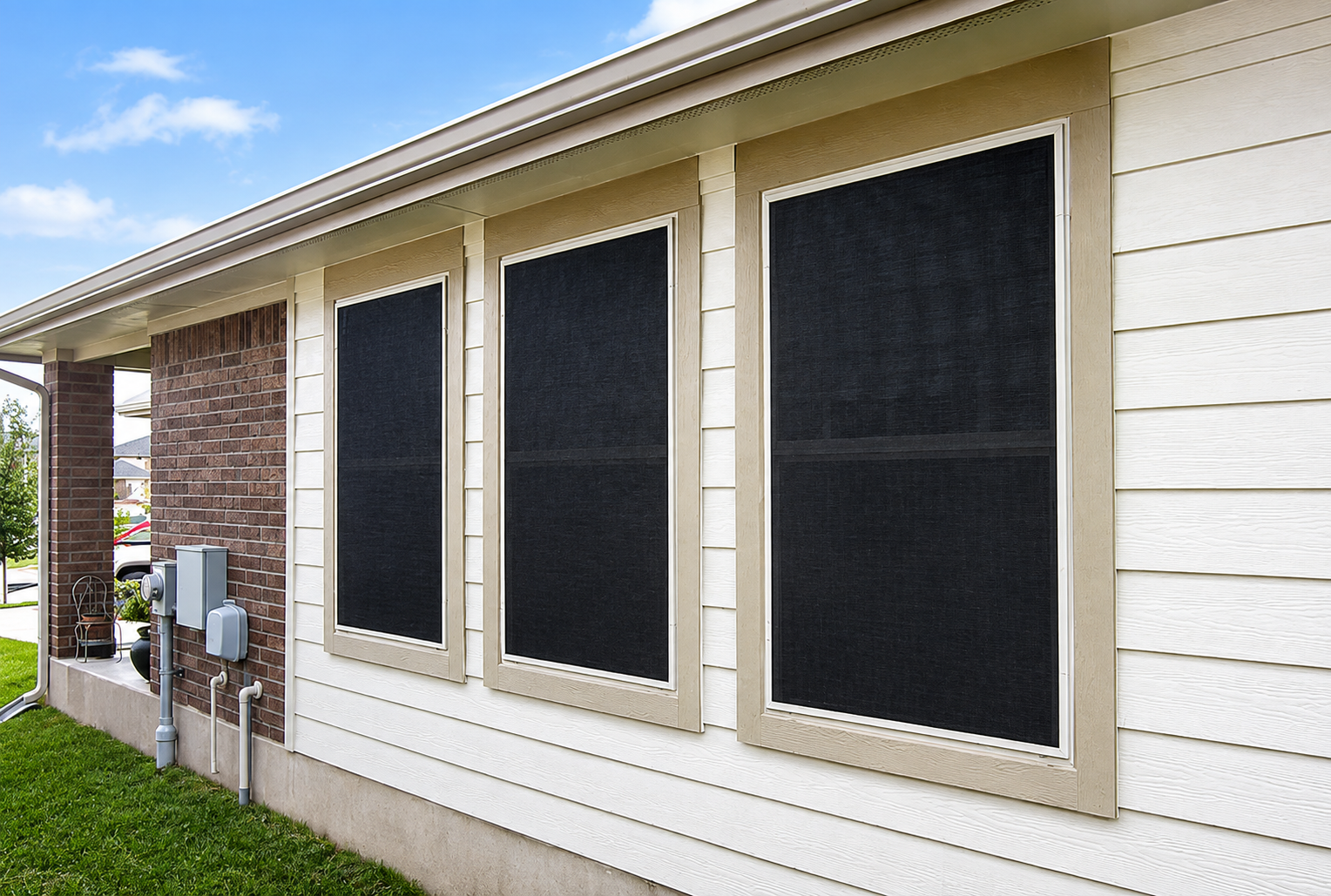
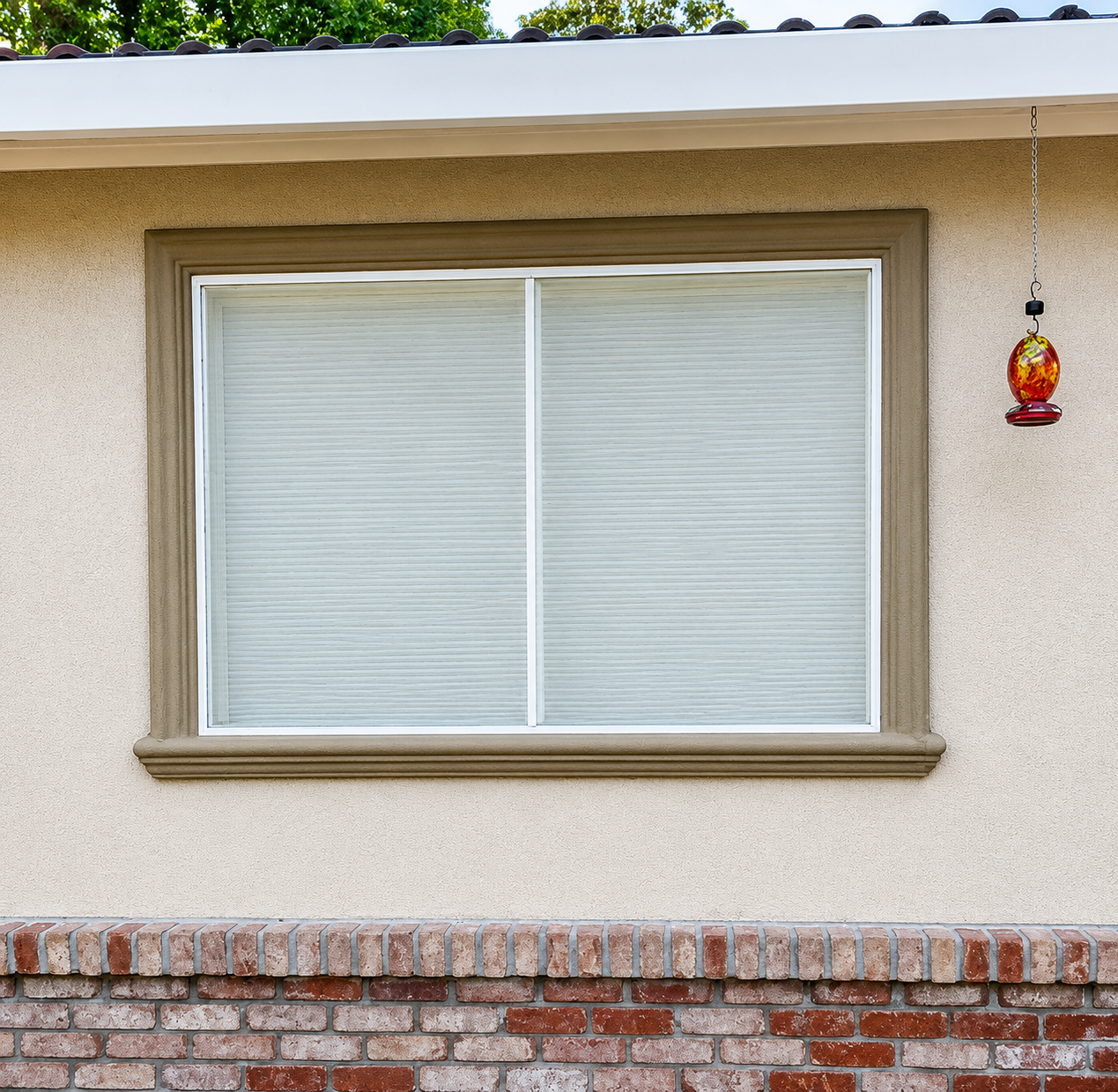
STOPPING HEAT OUTSIDE THE GLASS CHANGES EVERYTHING.
Once sunlight passes through a window, the energy is already inside the room and your cooling system has to remove it. Interior blinds only reflect part of that energy back out through glass that has already absorbed a share of the heat. Exterior screens intercept the radiation before any of that happens, which is a fundamentally different result.
That single difference in position is why homeowners notice the change on the very first afternoon rather than waiting to compare a utility bill 2 or 3 months later on.
- Fabric that blocks 80 to 90 percent of solar heat
- Frames built to each individual opening
- Density selected elevation by elevation
- Insect protection included in the same product
SOLAR SCREEN INSTALLATION
YOUR WEST WINDOWS ARE THE PROBLEM.
Every home has a handful of openings doing most of the damage, and they are almost always facing west or southwest. From roughly two o'clock until sunset those rooms absorb direct low-angle sun, and the furniture, flooring, and drywall keep radiating that heat for hours after dark. Homeowners respond by lowering the thermostat for the whole house because two rooms are uncomfortable. Screening the offending elevation costs far less than cooling every other room harder.
LAFAYETTE SUMMERS RUN LONG AND START EARLY.
Cooling season here is not 3 months. Rooms start gaining serious solar heat in March and keep it up well into October, which means any shading investment works for well over half the year. That length of season is exactly why exterior screening pays back faster in south Louisiana than it does in climates where summer is a brief inconvenience rather than the dominant condition.
SUMMER SUN TAUGHT US MORE THAN ANY CATALOG DID.
Specification sheets tell you what a fabric blocks in a laboratory. 30 years of installing screens on real houses tells you which elevations actually need 90 percent density, which rooms will feel gloomy if you overdo it, and where a homeowner will regret losing the view. We walk the house at the time of day the heat is worst and recommend accordingly. Which room in your home do you avoid every afternoon?
WHAT EXTERIOR SOLAR SCREENS DELIVER
ROOMS THAT STOP BAKING
The difference is immediate and physical rather than theoretical. Spaces that were unusable after lunch become comfortable enough to work, eat, or sit in without closing every blind in the house.
FURNITURE THAT KEEPS ITS COLOR
Blocking the large majority of ultraviolet light slows the fading that ruins upholstery, rugs, artwork, and wood flooring near sunny windows. That protection accumulates quietly over years of ownership.
GLARE YOU CAN ACTUALLY LIVE WITH
Screens cut the harsh reflection off screens and glossy surfaces without blacking out the window. You keep usable daylight and lose the squinting that comes with unfiltered afternoon sun.
DAYTIME PRIVACY WITHOUT CURTAINS
From outside, a solar screen reads as dark during daylight hours, so rooms facing a street or a neighbor gain privacy while the people inside keep their view out.
A COOLING SYSTEM THAT RESTS
Less solar gain means shorter run times and fewer long cycles during peak afternoon load. Equipment that works less hard tends to last longer and cost less to keep running.
INSECT PROTECTION IN ONE PRODUCT
The same fabric that handles heat and glare also functions as a conventional insect screen, so you can open windows on pleasant evenings without inviting half the yard indoors.
WHAT WE INSTALL
OUR SOLAR SCREEN WORK
Screening projects range from four problem windows to every opening on a house. These are the ways we take on solar screen work across the parish.
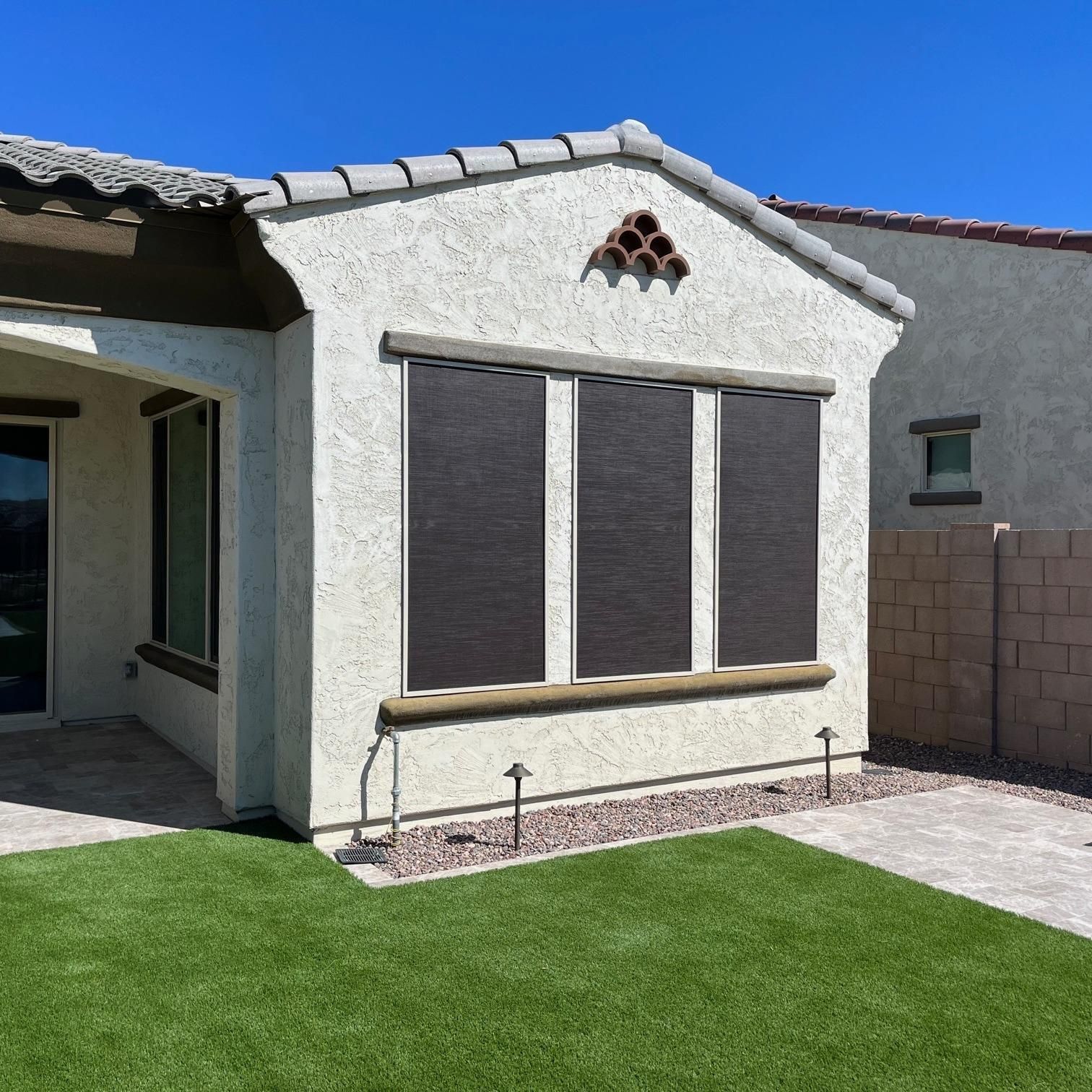
FULL COVERAGE
Whole Home Solar Screen Packages
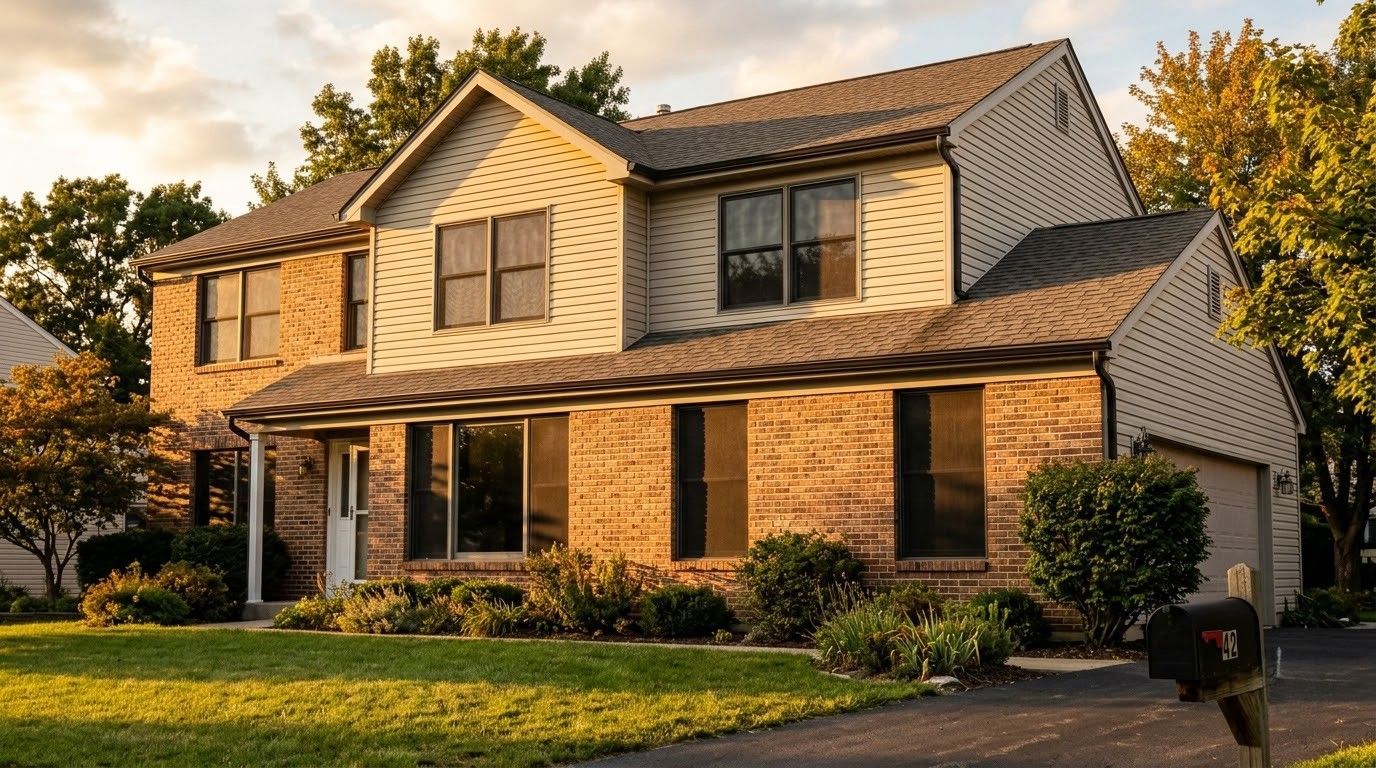
Screening every opening for consistent appearance and maximum heat reduction. Density can still vary by elevation within the package, so the north side keeps its daylight while the west side gets the heavier fabric.
WEST FIRST
Targeted Elevation Screening
Screening only the elevations doing the damage. It is the most efficient use of a budget, and many homeowners start here, then add the remaining sides once they feel the difference indoors.
DENSITY CHOICE
Eighty and Ninety Percent Screen Fabrics
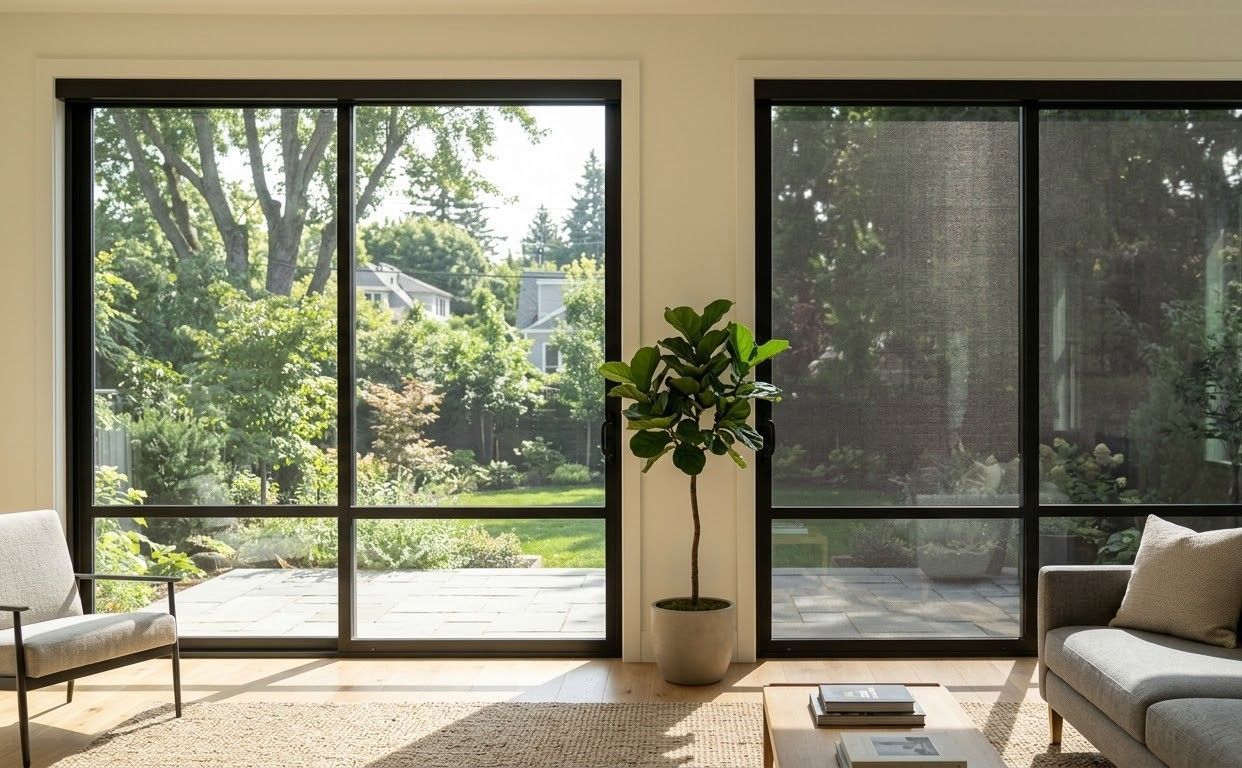
Two working densities covering most situations. The lighter fabric preserves more view and daylight, while the heavier one delivers maximum heat and glare reduction for the rooms taking direct afternoon exposure.
FRAME COLOR
Custom Frame and Fabric Colors
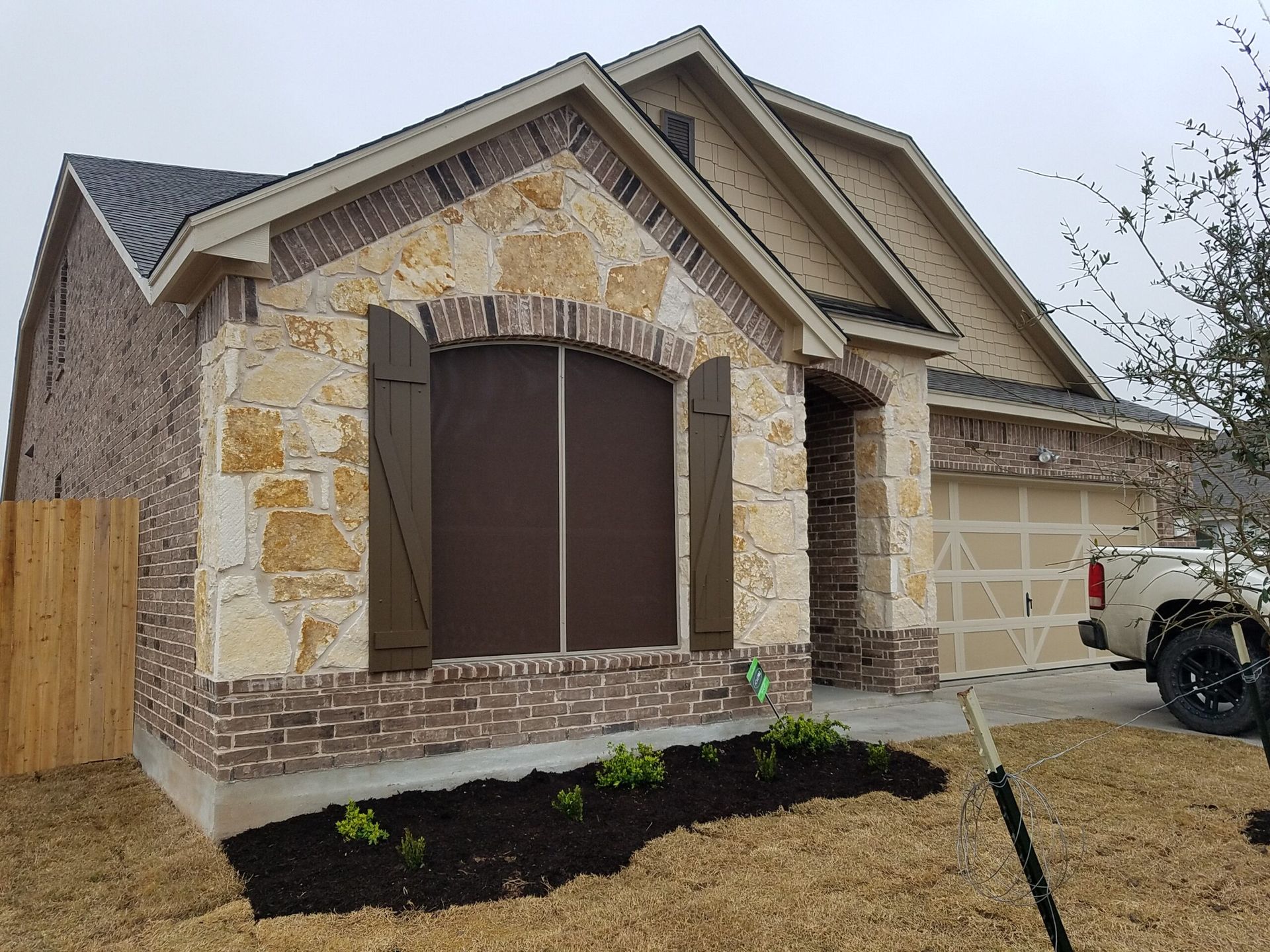
Frames and mesh in a range of colors so the screens read as part of the window rather than as an addition. Selection happens against your actual trim and siding.
BIG OPENINGS
Patio Door and Picture Window Screens
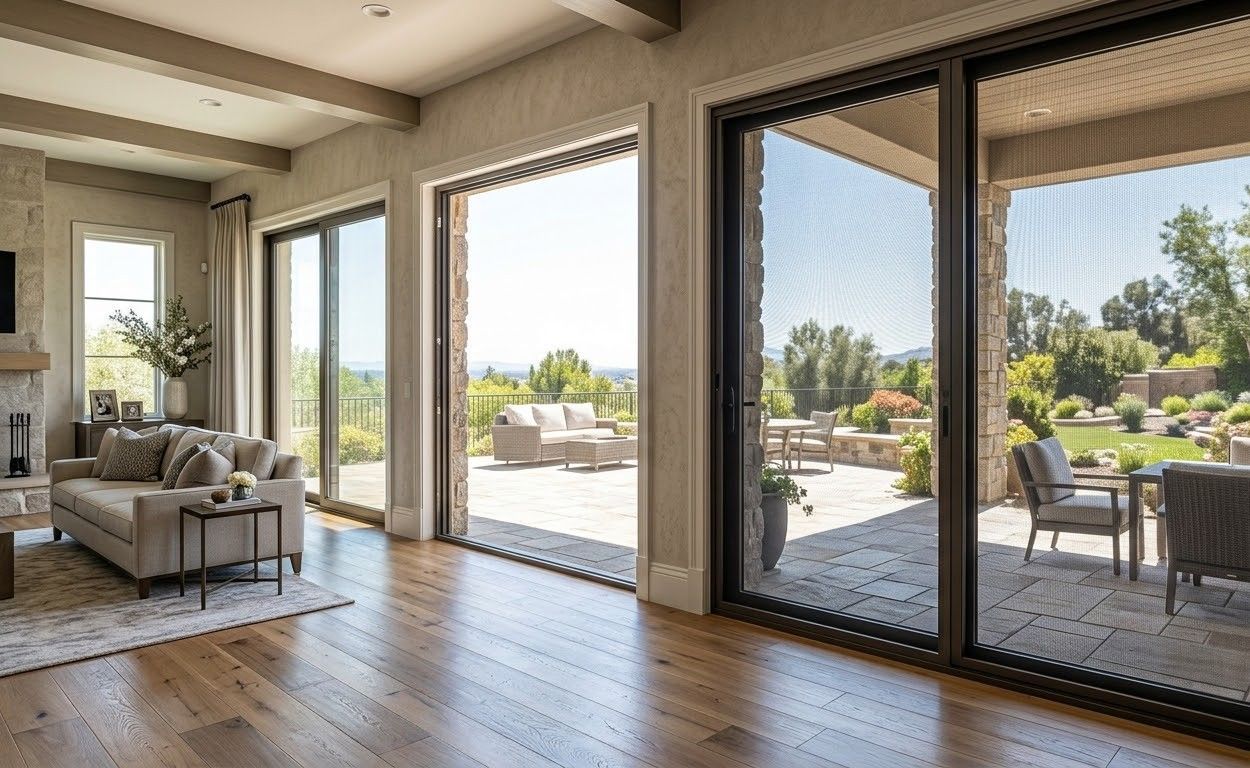
Large spans need heavier frames and careful reinforcement to stay square and tension the fabric properly. These openings usually deliver the biggest comfort improvement in the entire house.
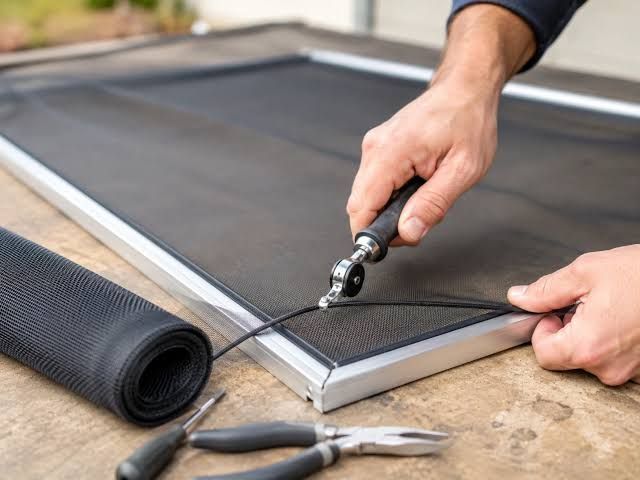
SCREEN REPAIR
Rescreening and Frame Repair
Replacing torn or sun-degraded fabric in frames that are still sound, and repairing bent or separated corners. Often the sensible answer when only a few screens on the house have failed.
Common Questions
FREQUENTLY ASKED QUESTIONS.
Most solar screen questions come down to two worries: whether the rooms will go dark, and whether the heat reduction is genuinely noticeable. Here are honest answers.
How much heat do solar screens actually block?
Common exterior fabrics stop 80 to 90 percent of solar heat and glare at the glass. Real world comfort improvement depends on which elevation is screened and how much direct exposure it receives.
Do solar screens make rooms too dark?
The lighter density preserves usable daylight and the view out while still cutting glare substantially. Rooms feel shaded rather than dim. Choosing density by elevation is what prevents the gloomy result people worry about.
Which windows should get solar screens first?
West and southwest-facing openings first, then south. Those elevations take the longest direct exposure here. LA Home Improvements LLC walks each elevation on Lafayette, LA homes before recommending which windows to screen and which to skip.
What is the difference between eighty and ninety percent screen fabric?
Denser mesh blocks more heat, glare, and ultraviolet light but gives up some visibility and daylight. Most homes end up mixing both, with the denser mesh reserved for the worst elevations.
Can solar screens stay up year-round?
Yes, and most homeowners leave them installed permanently. Winter solar gain in south Louisiana is minor and the cooling season is long, so the year-round tradeoff clearly favors leaving them in place.
Do solar screens work better than interior blinds?
Considerably better for heat, because they stop the energy outside the glass instead of after it has entered the room. Blinds remain useful for privacy and light control, so the two work together.
How long does solar screen fabric last outdoors?
Quality vinyl-coated polyester mesh commonly lasts a decade or longer in this climate, with manufacturers frequently backing it for 10 years. Fabric usually fails before the frame does, which makes rescreening straightforward.
Can solar screens be fitted to any window type?
Nearly all of them, including single-hung, double-hung, casement, sliders, and fixed picture windows. LA Home Improvements LLC builds frames to each opening on homes throughout Lafayette, LA rather than fitting stock sizes.
HOW WE WORK
FROM AN UNUSABLE ROOM TO A COMFORTABLE ONE, HERE IS HOW.
STEP 01
WE WALK THE ELEVATIONS
We identify which sides of the house take direct afternoon sun and which rooms you are actually avoiding. That conversation determines where screening will pay off and where it would be wasted money.
STEP 02
WE MEASURE EACH OPENING
Every window gets measured individually, because openings on the same wall are rarely identical once a house has settled. Accurate measurements are what keep frames tight and fabric properly tensioned.
STEP 03
WE CHOOSE THE DENSITY
Fabric density gets selected room by room rather than applied uniformly. Heavier mesh goes where heat is punishing, lighter mesh where you want to preserve the view and the daylight.
STEP 04
WE BUILD THE FRAMES
Frames are cut, cornered, and screened to your measurements, with reinforcement on the larger spans. Color is confirmed against your trim before anything is assembled and brought to the site.
STEP 05
WE FIT AND MOUNT
Screens go up with the appropriate clips or hardware for your window type, sitting flush and square. Nothing rattles in wind, and every screen remains removable for cleaning later.
STEP 06
WE CHECK THE VIEW
We look through every screen from inside with you before finishing. If a room reads darker than you expected, we would rather change the fabric now than have you living with a compromise.
Get Your Free Estimate
SEE WHAT REAL SHADE WOULD DO FOR YOUR HOUSE, FREE.
If there is a room you stopped using in July, the glass is usually the reason. Reach out through our contact page and we will come look at your elevations, identify which openings are actually driving the discomfort, recommend an appropriate fabric density for each one, and hand you a written price for the work. There is no obligation, and no pressure at all to screen windows that do not need it.
WHAT YOUR SOLAR SCREEN ESTIMATE COVERS:
- Which elevations are causing the heat gain
- Recommended density for each opening
- Frame and fabric color options
- Measurements for every window included
- Which windows we would leave unscreened
- A written price with no hidden line items